
What to Say When You Don’t Want to Sound Salesy as a Real Estate Agent

Why “Sounding Salesy” Is Such a Common Fear for Real Estate Agents
Many real estate agents worry more about how they sound than what they’re actually saying. The fear isn’t just about selling — it’s about sounding pushy, annoying people, or damaging relationships that matter. This concern shows up across everyday communication, whether that’s reaching out to friends and family, responding to online leads, following up after silence, or navigating conversations that don’t have a clear script.
Part of what makes this harder in real estate is the unspoken expectation that there’s a single “right” way to initiate contact — often framed as calling first, always. While phone calls and in-person conversations absolutely have their place, this one-size-fits-all mentality can add unnecessary pressure, especially when timing, context, or familiarity varies. In practice, real estate agents are constantly moving between channels, and the challenge isn’t which channel they use — it’s how confident and natural the language feels within it.
If you’ve ever hesitated before reaching out because you didn’t want to sound salesy as a real estate agent, you’re not alone. Not wanting to sound salesy usually isn’t a sign of insecurity or lack of confidence. More often, it’s a sign of professionalism and awareness. It means you care about how your words land and how people experience you.
In this article, we’ll break down why this fear is so common in real estate, what actually makes language feel salesy in the first place, and how real estate agent communication can stay clear, respectful, and pressure-free — whether you’re figuring out what to say to real estate leads by text, on the phone, or face-to-face.
What Actually Makes Real Estate Communication Sound “Salesy”
When real estate agents worry about sounding salesy, it’s usually not because they’re trying to pressure anyone. In fact, most of the time, the opposite is true. What makes language feel salesy rarely comes down to intention — it comes down to tone, timing, and pressure.
One common cause is overexplaining. When agents feel unsure or want to be helpful, they often compensate by adding more detail than necessary. Instead of creating clarity, this can overwhelm the person on the other end and make the message feel heavy or rehearsed — especially early in a conversation.
Another factor is forcing urgency where it doesn’t naturally exist. Language meant to motivate can quickly feel pushy if the timing is off. When someone hasn’t expressed readiness, urgency creates resistance rather than momentum.
Talking more than listening also plays a role. Communication starts to feel sales-driven when it centers the agent’s agenda instead of the other person’s context. The same thing happens when agents rely on generic, copied language that doesn’t reflect how they actually speak. Even polished templates can feel off if they aren’t grounded in real, human interaction.
At the core of all of this is one shift: trying to convince instead of inform. People tend to trust information more than persuasion. When the goal subtly changes from helping someone understand their options to steering them toward a decision, pressure creeps in — even if the words themselves sound polite.
This is where many scripts go wrong.
Recently, I was shown a real estate script that opened with: “Hi! I’m so excited to talk to you about your real estate needs today…”
I physically cringed — not because the person using it had bad intentions, but because of how that language would land in real life. And not just with a stranger. Even if this were coming from someone I already knew — a friend, a neighbor, someone in my extended circle — we’d probably need to have an awkward conversation about boundaries. Or, more honestly, I’d start avoiding them.
That reaction has nothing to do with rudeness. It’s because the language skips several relational steps. It assumes a level of excitement, readiness, and emotional openness that hasn’t been established yet. When communication jumps ahead of the relationship, people feel pressured — even when the words themselves sound friendly.
This is exactly how well-meaning communication starts to feel salesy. The issue isn’t enthusiasm; it’s misplaced enthusiasm. The tone and timing don’t match the moment, so instead of building trust, the message creates discomfort.
This is also why so many agents struggle with what to say — especially in early outreach or follow-up. Without grounded, trust-building language to lean on, it’s easy to default to scripts that sound “professional” on paper but fall flat in real conversations.
And once you understand that, something important clicks: sounding salesy as a real estate agent isn’t about being too aggressive or not confident enough. It’s about how language lands in a specific moment. When that’s clear, real estate agent communication becomes much easier to adjust — whether you’re figuring out what to say to real estate leads by text, on the phone, or face-to-face.
Why Real Estate Agents Struggle With This More Than Other Industries
Sounding salesy feels especially uncomfortable in real estate because the stakes are higher and more personal than in most industries. Buying or selling a home isn’t just a transaction — it’s tied to money, identity, timing, family dynamics, and often a lot of underlying stress. By the time someone interacts with an agent, they’re already emotionally charged, whether they show it or not.
At the same time, real estate agents are routinely given advice that prioritizes pressure over context. Early in my husband’s career, he was handed the standard playbook: scripts to follow, phones to pick up, books like 10X to read — all reinforcing the idea that if you wanted to succeed, you just had to call more, follow up relentlessly, and always be closing. The scripts were meant to build confidence through repetition, and in that sense, they weren’t useless.
But they were missing something critical.
They didn’t account for emotional trust. They didn’t reflect how people actually want to be spoken to when the decision in front of them is personal and high-stakes. After trying them, my husband threw most of those scripts away — not because he didn’t want to work, but because the language felt disconnected from how human beings respond.
Over time, we built a multi–six-figure business without a built-in sphere of influence. We didn’t move into a market where we knew everyone, and his growth didn’t come from pushing or pressure. It came from reaching out to cold and warm prospects, then keeping those relationships through calm, respectful communication — language that made people feel informed, supported, and cared for first, not handled.
On my end, I supported that growth through marketing strategy, online visibility, and messaging — paying close attention to what actually worked in real conversations versus what sounded good in theory. What became clear very quickly was that trust-building language mattered far more than volume alone. People stayed because they felt protected in a large, emotional transaction, not because they were convinced or closed.
Most real estate agents don’t want to sell — they want to be trusted. And the gap between that instinct and the industry’s loudest advice is exactly why this struggle shows up so persistently.
The Difference Between Sales Language and Service-Oriented Language
One of the most helpful distinctions real estate agents can make is the difference between sales language and service-oriented language. They’re often confused, but they land very differently — especially in early conversations.
Sales language tends to center the agent. It focuses on what the agent wants to do next, what the agent needs from the interaction, or what outcome the agent is aiming for. It often pushes decisions before the other person has fully oriented themselves and assumes readiness that may not actually exist. Even when the tone is friendly, the underlying message can feel like momentum is being applied to someone instead of built with them.
Service-oriented language works in the opposite direction. It lowers pressure instead of increasing it. It gives people options, acknowledges timing, and makes room for uncertainty. Rather than steering someone toward a conclusion, it invites conversation and understanding first. The focus shifts from “moving things forward” to helping someone feel clear and supported where they are right now.
You can hear the difference in simple phrasing. For example, an agent-centered message might focus on positioning:
“I’d love to connect and tell you more about how I can help you buy or sell your home.”
A service-oriented version shifts the focus entirely:
“I saw your interest come through and wanted to check in — no rush and no pressure — just to see what information would actually be helpful for you right now.”
Both messages are polite. But one centers the agent and their agenda, while the other centers the other person’s timing and needs. That difference alone changes how the conversation feels before it even begins.
This doesn’t mean avoiding questions or sidestepping responsibility. The goal isn’t to avoid asking — it’s to ask in a way that feels respectful and natural. Language that opens a door sounds very different from language that nudges someone through it.
In practice, this often looks like neutral check-ins instead of assumptions, information offered without urgency attached, and phrasing that allows the other person to set the pace. When communication is grounded this way, it builds trust without sacrificing clarity — and it becomes much easier to move forward when the timing is right.
Common Situations Where Real Estate Agents Feel the Most Stuck
For most real estate agents, the challenge isn’t knowing what to do — it’s knowing what to say in moments that carry social and emotional weight. Certain situations consistently create hesitation, not because they’re rare, but because they ask agents to navigate uncertainty in real time.
One of the most common is reaching out to someone you already know. When personal and professional lives overlap, agents worry about crossing a line or changing how they’re perceived. The relationship already exists, which makes the stakes feel higher and missteps feel more permanent.
Responding to a new online lead can feel even more uncomfortable. There’s pressure to sound professional and helpful, but there’s also a deeper layer of uncertainty. You don’t know who you’re reaching out to, what kind of mood they’re in, or how they’ll respond. Some people are receptive. Others are abrupt. Some will tell you not to contact them at all. That unpredictability can feel unsafe to the nervous system — like walking into a new country without knowing the rules or customs. It’s one of the biggest reasons many agents hesitate to pick up the phone or delay outreach altogether.
Following up after silence brings its own friction. Agents are left interpreting gaps without context, unsure whether they’re being patient or intrusive. And checking in without “just circling back” energy can feel impossible when no one ever modeled what neutral, respectful follow-up actually sounds like.
These moments aren’t rare — they’re everyday realities in real estate. And while no approach eliminates rejection entirely, the right language can dramatically reduce friction, soften responses, and make these interactions feel far more manageable.
Why “Winging It” Rarely Works (And Why Preparation Isn’t Fake)
Many real estate agents tell themselves they’ll “just wing it” when the moment comes. The intention is usually to sound natural and authentic. In reality, winging it often increases anxiety instead of reducing it.
Without prepared language to lean on, agents tend to overthink every message. Drafts get written, deleted, rewritten, and second-guessed. A simple follow-up can take far longer than it should, not because it’s complicated, but because there’s no internal reference for what “good” sounds like. The pressure to get it right creates hesitation, and hesitation leads to delay.
This is where preparation gets misunderstood. Prepared language doesn’t make you robotic — it makes you calmer. When the words are already thought through, your nervous system doesn’t have to work overtime in the moment. You can focus on listening, responding, and being present instead of scrambling for the right phrasing.
Having scripts or frameworks isn’t about performing. It’s about removing unnecessary friction so communication feels steadier, more natural, and easier to repeat over time.
Where the Right Words Actually Come From
The most effective language in real estate doesn’t come from theory or trend-driven templates. It comes from real conversations — messages that were actually sent, responses that moved things forward, and phrasing that worked in everyday situations.
Over time, certain patterns emerge. Language that respects timing gets better responses. Messages that reduce pressure tend to be answered more often. Calm, clear wording consistently outperforms anything designed to sound impressive or urgent. This kind of language isn’t invented in a vacuum — it’s refined through use.
What tends to fall short are scripts written by people who don’t regularly speak to clients or who rely on hype-driven sales copy. Those templates might look polished, but they often miss the nuance required for high-stakes, emotionally charged decisions.
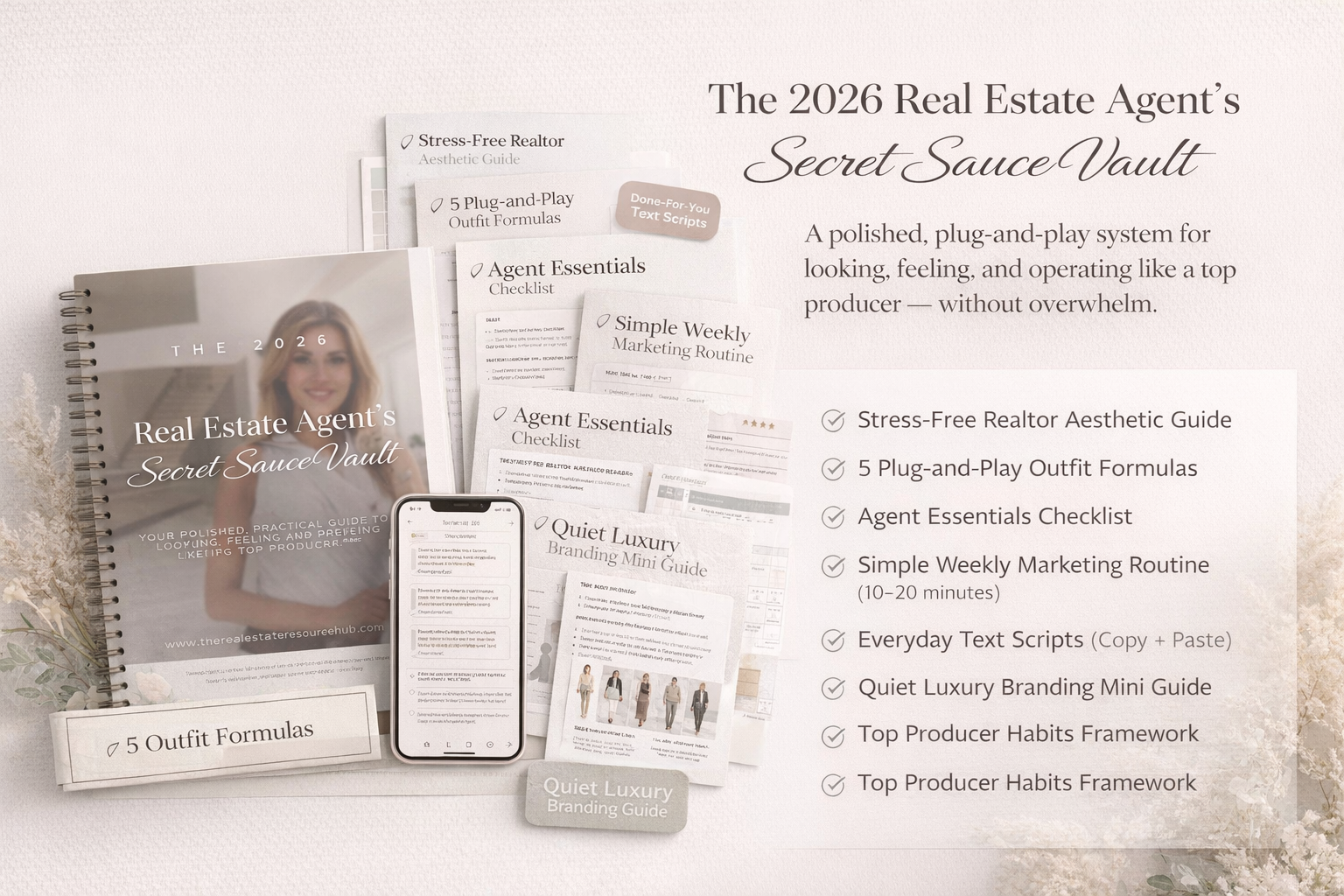
That’s why the scripts included in the Real Estate Agent’s Secret Sauce Vault exist. They’re pulled from real-world communication, shaped by what actually works, and designed to be used across situations where agents commonly feel stuck — especially in early outreach and follow-up.
A Simple Foundation You Can Come Back To
If any of this feels familiar, the issue usually isn’t effort or intent — it’s not having language you trust in the moments that matter most. Real estate puts agents in emotionally charged conversations every day, often without giving them the words to navigate those moments calmly.
That’s exactly why I created the Real Estate Agent’s Secret Sauce Vault.
At its core, the Vault exists to remove hesitation around communication. Inside, you’ll find 3 Everyday Copy-and-Paste Text Scripts for Real Agents — written to reduce resistance and eliminate the fear of sounding salesy:
Soft reconnects with people you already know
First-touch messages for new online leads
Gentle follow-ups for quiet or stalled conversations
These scripts are pulled from real conversations that actually worked. They’re text-friendly by design, adaptable to phone or in-person use, and not available free anywhere else. On their own, they’re the kind of resource that would reasonably be sold as a small paid product.
In addition to the scripts, the Vault also includes a set of grounding tools that support day-to-day clarity and consistency:
A 10-Item Agent Essentials Checklist so you feel prepared instead of reactive
A Simple Weekly Marketing Routine that answers “What should I actually be doing this week?”
A Quiet Luxury Branding Mini-Guide to help your marketing feel cohesive instead of random
A Stress-Free Realtor Aesthetic Guide and visual references pulled together in one place
The 3 Things Top Producers Do Differently, tying everything together so you’re not chasing every new idea
The value of the Vault isn’t any single page. It’s having common situations already covered, so you’re not starting from scratch every time something comes up.
If this were packaged as a paid mini-product, it would reasonably sit in the $20–$27 range, largely for the scripts and the work of pulling everything into one clear, printable system.
Right now, you can download the entire Vault for free.
👉 Download the Real Estate Agent’s Secret Sauce Vault here
Stay Connected for More Context and Insight
The blog explains the why. The Vault gives you a starting foundation. Email is where I share the nuance that doesn’t always fit neatly into posts or PDFs.
That’s where I talk through patterns I’ve noticed, small adjustments that make communication easier, and perspectives that only become clear over time — especially when you’re working with real people in emotionally charged situations. If you download the Vault, you’ll receive those emails automatically.
They’re not salesy, and they’re not constant. They’re meant to add clarity where real estate often feels noisy.
Clear, respectful communication is one of the most underrated skills in real estate — and it’s something you can learn without changing who you are.
I’ll see you there.
